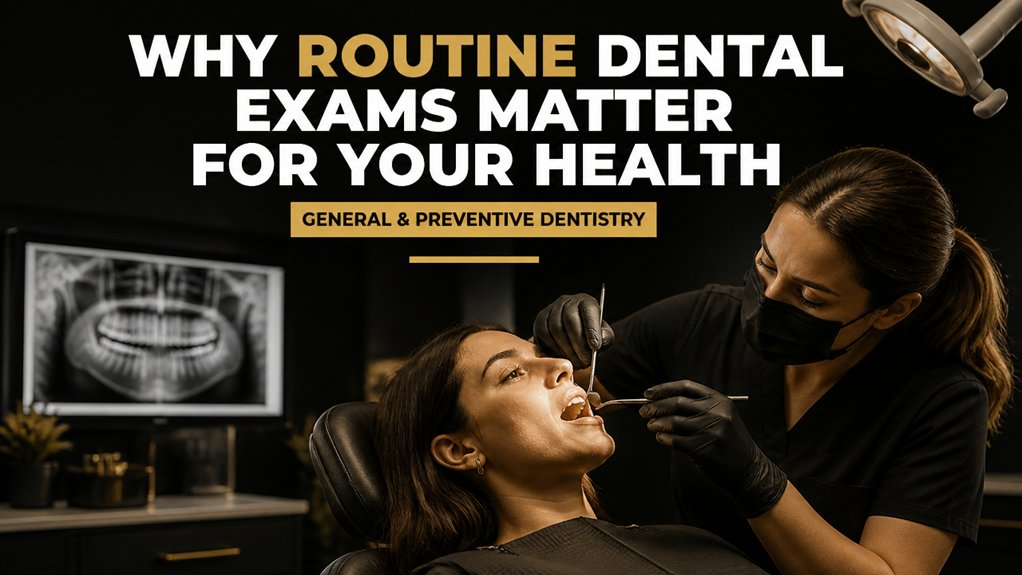
Why Routine Dental Exams Matter for Your Health
Routine dental exams catch diseases and damage you can’t detect on your own, often before they cause pain or irreversible harm. Your dentist screens for hidden decay, gum disease, and oral cancer while reviewing how your oral health connects to systemic conditions like diabetes and heart disease. Preventive care also saves you significant money by addressing small problems before they escalate. There’s far more to these visits than you might expect.
Key Takeaways
- Routine exams detect early decay, gum disease, and oral cancer before they cause serious, painful, or costly problems.
- Professional cleanings remove hardened tartar that brushing and flossing alone cannot eliminate, preventing gum disease progression.
- Oral health is linked to systemic conditions like diabetes and heart disease, making regular exams vital for overall health.
- Early detection saves money, with preventive care returning up to $50 for every dollar spent on routine visits.
- Dental needs change with age, requiring tailored exams to address childhood development, adult wear, and senior-specific concerns.
What Happens During a Routine Dental Exam

When you arrive for a routine dental exam, the dental team begins by collecting your medical history, current medications, allergies, and any systemic conditions that may affect your oral health or treatment.
They’ll also review your dental history, current symptoms, lifestyle habits, and oral hygiene practices to assess your risk for caries and periodontal disease.
Next, the dentist performs a clinical examination, inspecting each tooth for decay, cracks, and defective restorations while evaluating your gums, bite, and jaw function.
During the clinical exam, your dentist carefully inspects each tooth, gums, bite, and jaw for any issues.
They’ll also screen for oral cancer by examining your lips, tongue, throat, and neck.
Diagnostic imaging, such as bitewing or periapical X-rays, helps detect problems not visible clinically. Modern dental practices use low-radiation digital imaging that can reduce radiation exposure by up to 90% compared to traditional X-ray methods.
The exam concludes with professional cleaning, fluoride application, and documentation of all findings to guide your treatment plan. During the cleaning, a dental hygienist performs scaling and polishing to remove plaque and tartar buildup and smooth tooth surfaces to prevent further accumulation.
Most dental insurance plans cover two exams and cleanings per year, making it easy to stay on schedule with routine care. Your dentist may also provide personalized hygiene advice to help improve your at-home oral care routine based on your specific needs.
How Often Should You Get a Dental Exam?
How often you should get a dental exam depends on your individual risk profile rather than a one-size-fits-all schedule. Most dentists recommend exams every six months, and many insurance plans cover two visits annually.
However, current evidence shows that low-risk adults can safely extend intervals to 12–24 months without measurable harm. Your dentist is best positioned to determine your ideal recall interval after evaluating your oral hygiene, disease history, and overall health.
If you have active gum disease, frequent cavities, diabetes, or dry mouth from medications, you’ll likely need exams every three to six months. Pregnant individuals also benefit from more frequent monitoring due to heightened gum disease susceptibility.
Children should be seen at least every six to twelve months, depending on caries risk. In fact, children’s first dental exam should take place by their first birthday to establish early risk assessment and healthy habits.
Those who use orthodontic appliances such as Invisalign, night guards, or retainers should also keep up with regular visits to ensure proper fit and function of their dental devices.
Beyond oral health, routine exams give your dentist an opportunity to discuss lifestyle factors such as diet, smoking, and alcohol use that can significantly impact the condition of your teeth and gums. Many family dentists also use routine visits to apply preventive treatments like sealants and fluoride treatments, which help reduce the risk of decay before it becomes a costly problem.
Cavities and Decay You Can’t See or Feel
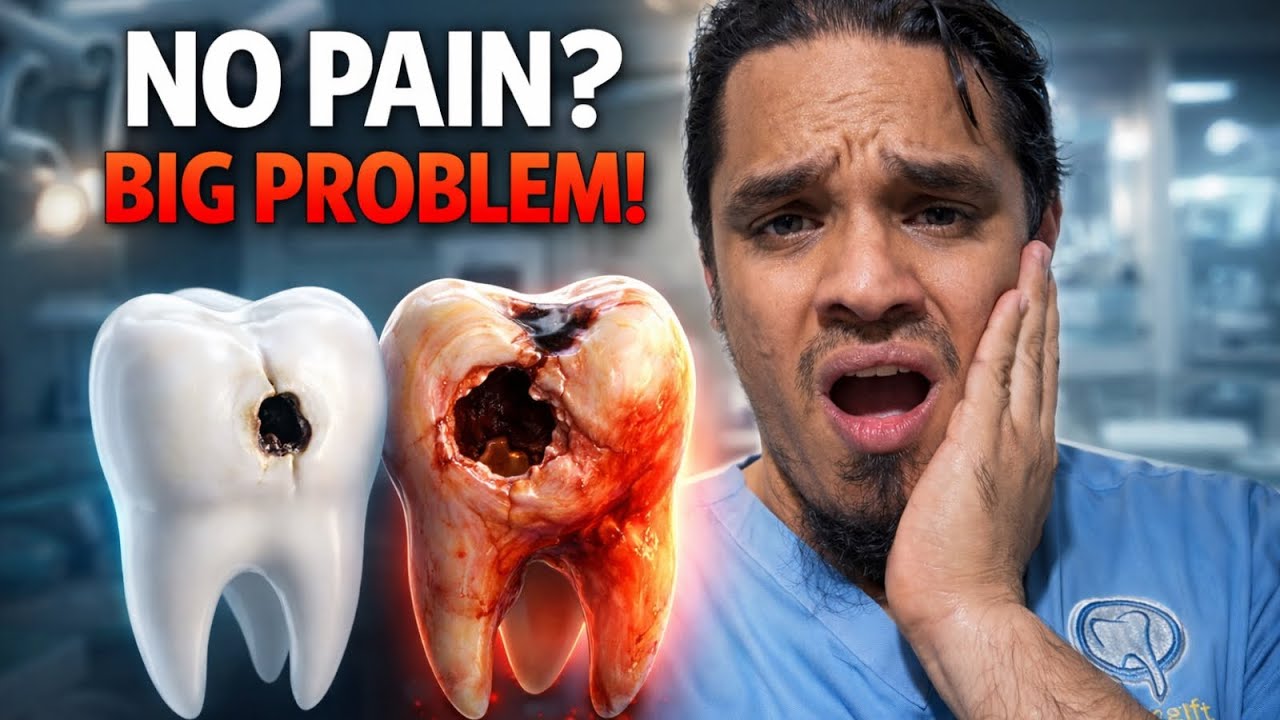
Cavities often develop without any warning signs you’d recognize on your own. Early decay can appear as a faint chalky spot on enamel, produce no pain, and remain completely invisible during home inspection. Because enamel contains no nerves, decay confined to that outer layer causes zero discomfort.
Decay also favors hidden locations—between teeth, deep within chewing surface grooves, and along the gumline—where neither your mirror nor your toothbrush gives you a clear view.
By the time you notice sensitivity or a toothache, decay has typically reached the dentin or pulp, where nerves reside.
Left untreated, these silent lesions expand, risking infection, abscess, and tooth loss. Dental x-rays reveal dark shadows where healthy tooth structure should be, exposing decay that would otherwise go undetected for years. A professional exam catches what you can’t see or feel, stopping progression before serious damage occurs. When decay advances into an dental infection stage, it can escalate into a dental emergency requiring immediate pain relief procedures such as a root canal.
Cavities progress slowly at first, but fluoride and sealants can treat enamel-only decay before it advances into deeper, more painful stages requiring invasive procedures. Poor dental hygiene combined with frequent snacking and sugary drinks accelerates this process, making routine exams especially critical for catching decay before it takes hold.
What Can Dental X-Rays Reveal That Eyes Can’t?
Even when a dentist catches early decay through visual inspection, some threats remain completely out of sight—buried beneath gums, locked inside bone, or hiding within tooth structures that no mirror or probe can reach. X-rays expose what visual exams simply can’t.
Radiographic imaging detects root abscesses and chronic infections before pain or swelling develops. It identifies impacted or congenitally missing teeth, reveals developing tooth buds in children, and maps angulation for orthodontic planning.
X-rays also measure alveolar bone loss, evaluate jaw density for implant suitability, and pinpoint nerve canals to reduce surgical risk.
Beyond teeth, they screen for cysts, tumors, and sinus changes in surrounding bone—often before you’d notice any symptom. That’s diagnostic power no visual exam can replicate. Small cavities forming between teeth or beneath the gumline are also commonly missed during visual checks, making early cavity detection one of the most valuable benefits of routine radiographic imaging.
Modern dental x-rays are considered very safe, with lead aprons and thyroid collars used during imaging to protect patients from unnecessary radiation exposure. For healthy individuals, dentists typically recommend x-rays every 6 to 18 months, though frequency may vary based on a patient’s specific oral health needs.
How Routine Dental Exams Protect Your Gums
Gum disease doesn’t start with loose teeth—it starts with bacterial buildup at the gumline that your toothbrush can’t fully reach. Professional cleanings remove hardened tartar that home care simply can’t eliminate, reducing the inflammation and bleeding that signal early gum disease.
Polished tooth surfaces then slow future plaque accumulation, making your daily brushing more effective.
During exams, your dentist measures pocket depths, checks for recession, and tracks changes over time—distinguishing reversible gingivitis from destructive periodontal disease before bone loss occurs. Dentists may also use low-radiation digital imaging to gain a more accurate picture of your bone levels and underlying gum structures that aren’t visible to the naked eye.
You’ll also receive targeted guidance on brushing at a 45-degree angle, using interdental cleaners, and managing risk factors like smoking.
These combined efforts—professional treatment, consistent monitoring, and personalized home-care instruction—are what prevent early gum problems from advancing into irreversible damage. Research has also shown that gum disease is linked to serious systemic conditions such as diabetes and heart disease, making routine exams critical beyond just oral health.
Persistent mouth sores and bleeding gums are among the warning signs that poor oral hygiene may be progressing, making early detection through routine exams essential to preventing further complications. Dentists recommend scheduling these exams every six months to ensure gum issues are caught and addressed before they escalate into more serious conditions.
Why Gum Disease Goes Unnoticed Without Regular Dental Exams
Gum disease often advances silently, causing tissue and bone destruction long before you notice pain or visible changes.
Without a dentist’s probe and X-rays, you can’t detect the hidden plaque and tartar accumulating beneath your gumline or measure the pocket depths that signal periodontitis.
Catching these changes early through regular exams is what preserves your teeth and prevents irreversible damage. In fact, nearly 50% of adults over 30 are affected by periodontitis, making routine detection more critical than ever.
Poor oral hygiene and untreated gum disease have also been linked to systemic health issues such as heart disease and diabetes, making regular exams vital beyond just your mouth. Research increasingly shows that holistic health connections extend to sleep wellness, as inflammation from gum disease may contribute to broader physiological disruptions.
Gum disease begins with gingivitis, an early stage that causes red and bleeding gums, yet at this point no permanent damage has occurred, making it the ideal time to intervene.
Silent Progression of Periodontitis
Periodontitis often advances without warning, making it one of the most underdiagnosed conditions in oral health. Unlike conditions that signal trouble through pain, gum disease progresses silently over months or years while destroying bone and connective tissue beneath the surface.
By the time you notice visible recession, tooth mobility, or persistent discomfort, significant structural damage has already occurred.
Early signs like slight gum redness, occasional bleeding, or chronic bad breath are easy to dismiss as minor. That dismissal allows infection to continue unchecked. Nearly 50% of adults over 30 have some form of gum disease, yet many remain unaware.
Regular dental exams include periodontal measurements that detect increased pocket depths and early attachment loss before visible changes appear, giving you the best chance at reversing damage before it becomes permanent. Research also links periodontal disease to systemic health conditions such as cardiovascular disease and diabetes, meaning untreated gum disease can carry consequences well beyond your mouth.
Gum disease is also a leading cause of tooth loss in adults, as the infection gradually compromises the bone and supporting structures that keep teeth in place. When caught in its earliest stage as gingivitis, the condition remains limited to gum tissue and is still fully reversible with professional care and improved daily habits.
Hidden Plaque and Tartar
Even after careful brushing, plaque begins reforming on your teeth within hours. Because early plaque is colorless, you often can’t see it developing—especially in hard-to-reach areas.
When plaque hardens into tartar, only a professional can remove it.
These concealed deposits create serious risks:
- Gumline buildup traps bacteria directly where gum tissue is most vulnerable.
- Interdental spaces and deep molar grooves retain plaque that standard bristles can’t disturb.
- Tartar’s rough surface attracts additional bacterial layers, accelerating gum irritation.
- Periodontal pockets harbor deposits completely inaccessible with home-care tools.
Without professional visualization and instrumentation, these hidden reservoirs go undetected and untreated. Bacteria feeding on carbohydrates and sugars release acids that quietly damage teeth and surrounding tissue during this time. Acid damage occurs gradually, making it nearly impossible to recognize without a trained clinical eye.
Untreated gingivitis can progress into periodontitis, where plaque below gum line causes pain, inflammation, and eventual breakdown of the tissue and bone that hold teeth in place. Using antiseptic mouthwash as part of a daily routine can help reduce the bacterial load that contributes to this progression.
Regular dental exams allow clinicians to identify and remove deposits before they silently advance into significant gum disease.
Early Detection Saves Teeth
Unlike a cavity that can cause noticeable pain, early gum disease is often completely silent—and that silence is exactly what makes it dangerous.
You might notice mild redness or occasional bleeding when brushing and dismiss it as nothing serious. But those subtle signs can indicate gingivitis—a reversible condition that, without professional attention, progresses into periodontitis.
Once periodontitis develops, it permanently destroys the bone and connective tissue supporting your teeth. That damage can’t be fully restored.
Your dentist detects what you can’t. Periodontal probing measures pocket depths, revealing early bone loss invisible to you at home.
Radiographic assessments confirm what clinical exams suggest. Catching gum disease at the gingivitis stage keeps it reversible—protecting your teeth, your bite, and your quality of life. Beyond oral health, untreated gum disease has been linked to serious systemic health conditions, including cardiovascular disease and diabetes.
How Dental Exams Reduce Your Risk of Heart Disease
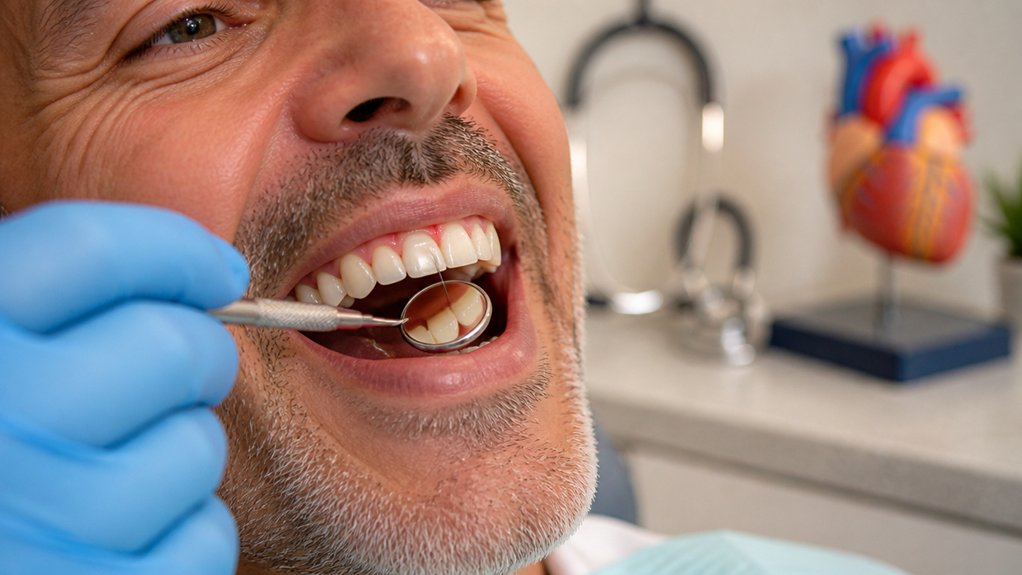
When your gums are inflamed, the infection doesn’t stay confined to your mouth—bacteria and inflammatory markers enter your bloodstream, contributing to arterial plaque buildup and raising your risk of heart attack by up to 28% or more.
Regular dental exams catch periodontal disease early, before it creates the ulcerated gum tissue that serves as a gateway for oral bacteria to reach your heart and blood vessels.
Oral Inflammation and Heart Health
Your mouth and heart are more connected than most people realize. When gum disease develops, oral bacteria enter your bloodstream and trigger systemic inflammation that directly harms cardiovascular health.
Key risks linked to periodontal inflammation include:
- Atherosclerosis – bacterial-driven plaque buildup narrows arteries, raising heart attack and stroke risk
- Elevated CRP and IL-6 – inflammatory markers that impair endothelial function
- Hypertension – periodontal disease contributes to the inflammatory environment underlying high blood pressure
- Endocarditis – bloodborne oral bacteria can infect heart valves
Research shows you’re about 28% more likely to suffer a heart attack if you have significant gum disease.
Routine dental exams detect and treat periodontal inflammation early, reducing your systemic inflammatory burden and protecting your cardiovascular health.
Preventing Systemic Disease Progression
Routine dental exams do more than protect your smile—they actively reduce your risk of serious cardiovascular disease by catching and treating oral infections before they drive systemic harm.
When periodontitis goes undetected, oral bacteria enter your bloodstream, accelerate arterial plaque formation, and raise your heart attack risk by up to threefold.
Regular exams interrupt this progression by identifying disease early, guiding professional cleanings that reduce pathogenic biofilm, and eliminating infection sources before they trigger broader vascular damage.
If you have a structural heart condition, this prevention becomes even more critical—unmanaged dental infections can cause infective endocarditis, stroke, or heart failure.
Treating oral disease at the source isn’t just dental care; it’s a measurable cardiovascular intervention that protects your long-term health.
Why Diabetics Need Routine Dental Exams for Blood Sugar Control

Managing diabetes effectively extends well beyond monitoring blood sugar levels and adjusting medications — it also requires protecting your oral health.
Periodontal disease and glycemic control share a bidirectional relationship — each condition worsens the other when left unmanaged.
Routine dental exams help you:
- Detect early gum disease before it progresses to periodontitis and reduces insulin sensitivity
- Receive periodontal treatment that lowers bacterial load, reduces systemic inflammation, and improves HbA1c levels
- Identify oral infections like abscesses or fungal overgrowth that destabilize blood glucose control
- Maintain periodontal stability through 3–6 month cleanings that sustain glycemic improvements achieved after initial therapy
Untreated periodontitis increases your risk of cardiovascular mortality and all-cause mortality.
Consistent dental care isn’t optional for diabetics — it’s an essential component of your disease management.
Oral Cancer Screening During Every Dental Exam
Every dental exam includes a brief, painless oral cancer screening that takes only a few minutes to complete.
Your dentist systematically examines your lips, tongue, cheeks, gums, floor of the mouth, palate, and throat for suspicious changes in color, texture, or tissue consistency. Lymph nodes and facial structures are also checked externally.
Your dentist looks for warning signs like white or red patches, persistent ulcers, swelling, or firm tissue that doesn’t resolve.
Catching these abnormalities early greatly improves treatment outcomes.
No preparation is required on your part. If your dentist identifies something suspicious, a biopsy confirms whether it’s cancerous.
Your medical history, including tobacco use, vaping, and alcohol consumption, helps your dentist assess your personal risk level during each visit.
How Early Detection Saves Lives and Lowers Treatment Costs
When you attend routine dental exams, your dentist can identify decay, gum disease, and other conditions before they progress to stages requiring costly, invasive treatment.
Catching problems early typically means smaller fillings instead of crowns, root canals, or extractions—procedures that carry considerably higher price tags and longer recovery times. For example, tooth loss that goes unaddressed can compromise jawbone density, which is a critical factor in determining whether a patient is a candidate for dental implant placement.
Catching Problems Before Worsening
Routine dental exams catch problems early—before they silently progress into complex, costly conditions. Many oral diseases develop without pain, making professional detection essential.
During each visit, your dentist identifies:
- Hidden decay – X-rays reveal early demineralization before cavities deepen
- Gingivitis – Caught early, it’s reversible before permanent bone loss develops
- Small cracks – Minor fractures get simple repairs before complete tooth breakage occurs
- Oral cancer signs – Non-healing sores, red or white patches, and abnormal tissue are screened every visit
Early-stage oral cancer carries an 85% five-year survival rate—late-stage diagnosis drops that considerably. Treating a small cavity preserves natural tooth structure, while delayed care may require root canals or extraction.
Consistent 6-month exams keep you ahead of silent progression.
Prevention Reduces Financial Burden
Preventive dental care doesn’t just protect your health—it protects your finances. For every dollar you spend on routine exams, cleanings, and fluoride treatments, you can save an estimated $8–$50 in future restorative or emergency costs. Fillings, crowns, and root canals are considerably more expensive than the preventive visits that help you avoid them.
Most dental insurance plans cover preventive care at 100%, including two annual exams, cleanings, and X-rays—often without copays. If you’re uninsured, community health centers, dental schools, and membership plans offer low-cost alternatives.
Emergency dental visits are costly and stressful. By attending routine appointments, you address small issues before they escalate into urgent, high-expense interventions.
Consistent prevention isn’t just clinically sound—it’s the financially responsible choice for your long-term care.
How Routine Dental Exams Prevent Emergencies Before They Start
Most dental emergencies don’t appear without warning—they develop quietly from problems that a routine exam could’ve caught months earlier.
When you schedule regular checkups, your dentist identifies threats before they escalate into pain, infection, or costly procedures.
Routine exams intercept four critical risk areas:
- Decay – Small cavities get filled before they reach the pulp and require root canals
- Gum disease – Early gingivitis is treated before it progresses to bone loss or abscess
- Oral cancer – Suspicious lesions are detected while prognosis remains favorable
- Hidden damage – X-rays expose infections and decay invisible to the naked eye
Each of these conditions worsens silently.
Your exam appointments are the mechanism that interrupts that progression before it demands emergency intervention. For children, dentists recommend scheduling first dental visit by age one or six months after the first tooth erupts, ensuring early threats are caught before they develop into serious problems.
What Professional Cleanings Remove That Brushing Misses
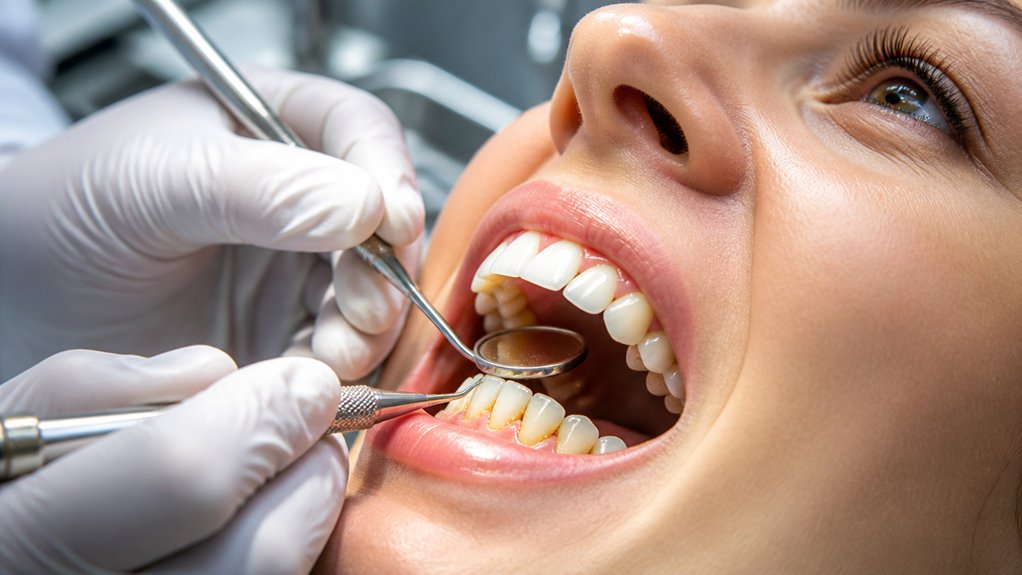
Even when you brush and floss consistently, your home routine leaves specific threats behind that only professional cleaning can address.
Plaque mineralizes into hardened tartar within 24 hours, and once it hardens, no toothbrush can remove it. Scaling instruments and ultrasonic tips mechanically break off tartar from enamel surfaces, gumlines, and just beneath them, where bacterial loads remain highest.
Plaque hardens into tartar within 24 hours — and only professional scaling can remove it.
Professional tools also access deep grooves, tight contacts, curved root surfaces, and periodontal pockets that bristles simply can’t reach. In these areas, mature biofilm persists and drives inflammation, pocket deepening, and eventual bone loss.
Below the gumline, scaling and root planing remove subgingival deposits and smooth root surfaces so gum tissue can reattach.
Without this intervention, chronic bacterial exposure accelerates periodontitis regardless of how diligently you brush at home.
Brushing Habits, Diet, and Risk Factors Your Dentist Reviews With You
Professional cleaning removes what builds up despite your habits—but your habits determine how quickly those deposits return.
Your dentist reviews your daily routine to identify specific risks and correct them before damage occurs.
Key areas your dentist evaluates include:
- Brushing technique – soft-bristled brush, two minutes twice daily, 45-degree angle at the gumline, covering all surfaces
- Interdental cleaning – daily flossing or interdental brushes reach plaque your toothbrush can’t
- Diet patterns – frequent sugary snacks and sipping sweetened drinks prolong acid attacks on enamel
- Systemic risk factors – tobacco use, diabetes, and dry mouth greatly elevate your risk for gum disease and decay
Addressing these factors directly reduces your cavity and periodontal disease risk between every visit. Maintaining optimal oral health also supports any cosmetic dental goals you may be working toward, since a healthy foundation is essential before pursuing treatments like whitening or veneers.
How Dental Exam Needs Change at Every Age
Your dental exam needs shift considerably as you move through life’s stages, from monitoring tooth eruption and jaw development in childhood to managing gum disease, enamel wear, and restorative maintenance in adulthood and beyond.
During childhood, your dentist tracks mixed dentition, cavity risk in newly erupted permanent teeth, and orthodontic milestones that shape your long-term oral health.
As you age into adulthood and your senior years, your exams increasingly focus on cumulative damage, periodontal changes, and systemic conditions that can directly affect your mouth.
Children’s Developing Dental Needs
As children grow, their dental needs shift dramatically — and so do the goals of each exam. Starting dental visits by age 1 builds a foundation for lifelong oral health.
Each stage brings specific clinical priorities your child’s dentist actively monitors:
- Infancy (0–12 months): First exam by 12 months; gum care begins before teeth erupt
- Toddlers (1–3 years): Fluoride varnish applications can prevent roughly 33% of primary tooth cavities
- Preschool (3–6 years): Pea-sized fluoride toothpaste introduced; flossing begins when teeth touch
- All early stages: Caries risk assessment, diet counseling, and habit evaluation at every visit
Dental caries remains the most common chronic childhood disease in the U.S. — routine exams are your most effective prevention tool.
Adult and Senior Oral Changes
Childhood sets the stage, but oral health demands don’t stop once your permanent teeth are in place — they keep shifting across every decade of adult life.
In your 20s and 30s, exams target plaque control, early gum inflammation, and caries risk while establishing radiographic baselines for future comparison.
By your 40s and 50s, cumulative damage accelerates — recession, attachment loss, and aging restorations require closer monitoring, and your dentist screens for systemic links like diabetes and cardiovascular disease.
Once you reach your 60s, polypharmacy-driven dry mouth raises root caries risk considerably, and prosthetic fit, mucosal health, and oral cancer screening become central exam priorities.
Your needs genuinely evolve, so your exam should too — static, one-size-fits-all dental care won’t adequately protect your health across a lifetime.
Frequently Asked Questions
Does Dental Insurance Typically Cover the Cost of Routine Exams?
Yes, your dental insurance typically covers routine exams at 100% when you visit an in-network provider. Most plans include two exams yearly with no copay, and they’ll usually waive your deductible for preventive care.
Can Anxiety or Dental Phobia Affect How Often People Attend Exams?
Yes, anxiety and dental phobia can considerably reduce how often you attend exams. They’re known to cause appointment avoidance, cancellations, and irregular attendance, leading you to seek care only when pain or severe symptoms arise.
Are Routine Dental Exams Safe During Pregnancy?
Yes, routine dental exams are completely safe during pregnancy. You can confidently attend cleanings, X-rays with shielding, and receive local anesthesia. They’re not just safe—they’re recommended to protect both your oral health and your baby’s wellbeing.
How Long Does a Typical Routine Dental Exam Usually Take?
Your routine dental exam typically takes 30–60 minutes. That time includes cleaning, possible X‑rays, and the dentist’s examination. New patients or those with complex issues may need closer to a full hour.
Can Children and Adults Share the Same Dental Exam Procedures?
Like two rivers sharing the same source, children and adults share core dental procedures—cleaning, X-rays, and clinical exams—but your child’s visits also include growth monitoring, sealants, and behavior management techniques unique to developing smiles.
Conclusion
Your mouth tells a story your body can’t hide. Routine dental exams don’t just protect your teeth—they protect your overall health by catching decay, gum disease, and systemic warning signs before they escalate. You can’t brush away calculus, and you can’t feel every cavity forming beneath the surface. Staying current with your exams isn’t optional maintenance; it’s essential prevention. Schedule your next appointment and take control of your long-term health now.
References
- https://www.ashleyburnsdds.com/blog/routine-dental-exams-what-they-entail-and-why-they-matter
- https://www.firsthilldentalcenter.com/dental-health/the-importance-of-regular-dental-exams-for-long-term-oral-health/
- https://flatironfamilydental.com/blog/the-importance-of-regular-dental-check-ups-i-flatiron-family-dental/
- https://candmromenesko.dental/what-happens-during-a-routine-dental-exam/
- https://www.stardentalma.com/blogs/importance-of-regular-dental-check-ups
- https://dentistbenson.com/why-routine-dental-exams-are-essential-for-long-term-oral-health/
- https://jaxdentalarts.com/blog/why-routine-dental-exams-matter-for-every-age/
- https://westonfamilydentalflorida.com/10-routine-dental-exams-benefits/
- https://www.glendaleheightsfamilydental.com/blogs/dental-exam-what-to-expect
- https://medlineplus.gov/lab-tests/dental-exam/
- https://www.deltadental.com/protect-my-smile/visiting-the-dentist/what-happens-during-a-dental-checkup/
- https://www.drstanpaloalto.com/blog/what-to-expect-on-a-routine-dental-exam-19/
- https://www.healthpartners.com/blog/dental-preventive-visit/
- https://www.absolutedental.com/blog/expect-routine-dental-exam/
- https://www.nhs.uk/live-well/healthy-teeth-and-gums/dental-check-ups/
- https://my.clevelandclinic.org/health/treatments/11187-dental-check-up
- https://www.cigna.com/knowledge-center/what-happens-during-a-dental-check-up
- https://www.deltadental.com/protect-my-smile/visiting-the-dentist/how-often-should-i-see-my-dentist/
- https://www.captaindental.com/blog-posts/how-often-should-i-schedule-a-dental-cleaning-and-checkup
- https://www.kimfitzgeralddmd.com/how-often-should-i-have-a-dental-exam—cleaning-