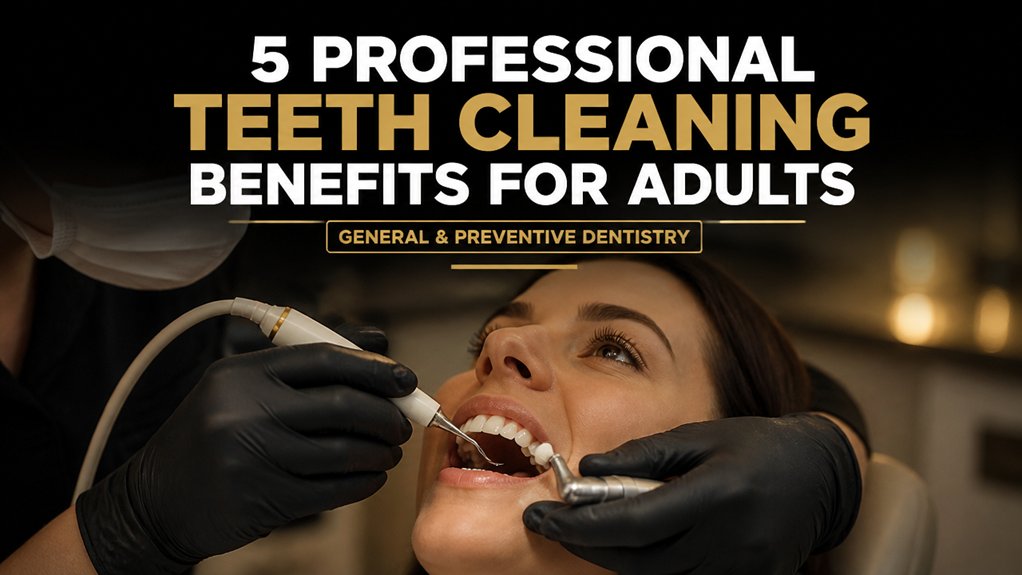
5 Professional Teeth Cleaning Benefits for Adults
Professional teeth cleanings remove plaque and tartar your toothbrush can’t reach, preventing cavities and gum disease. They include screenings for oral cancer and early decay, enabling timely intervention. Treating gum disease also protects your heart, brain, and blood sugar regulation. Cleanings freshen your breath and remove stains, boosting your confidence. Financially, every dollar spent on preventive care saves up to $50 in future treatments. The details ahead break down exactly what you stand to gain.
Key Takeaways
- Professional cleanings remove plaque and tartar buildup, preventing cavities and reducing the risk of gum disease and periodontitis.
- Routine visits include oral cancer screenings, enabling early detection and significantly improving treatment outcomes.
- Treating gum disease lowers systemic health risks, including heart disease, stroke, and poor blood sugar regulation.
- Scaling and polishing eliminate stains and bacteria, reducing bad breath and enhancing your smile’s appearance.
- Preventive cleanings cost around $104, saving thousands by avoiding expensive fillings, surgeries, or tooth replacements.
How Dental Cleanings Prevent Cavities and Gum Disease
Professional dental cleanings prevent cavities and gum disease primarily by removing plaque and tartar that your toothbrush and floss can’t fully eliminate.
Plaque’s bacteria metabolize dietary sugars, producing acids that demineralize enamel and initiate decay. When plaque hardens into tartar, it anchors bacteria against tooth surfaces and below the gumline, where it triggers inflammation, pocket formation, and eventual periodontal bone loss.
During a professional cleaning, hygienists use ultrasonic devices and hand instruments to remove these deposits from both supra- and subgingival surfaces, considerably reducing cariogenic and pathogenic bacterial loads. Advanced ultrasonic scaling technology offers a more comfortable cleaning experience while effectively disrupting bacterial deposits that manual tools alone may miss.
Many cleanings also include fluoride varnish application, which strengthens enamel and supports remineralization of early lesions.
Combined with consistent home care, professional cleanings remain a clinically validated strategy for controlling plaque accumulation and preventing both caries and gum disease progression. Routine checkups also allow dentists to identify early signs of cavities and other dental issues before they develop into more complex problems.
Dental hygienists also provide personalized oral hygiene advice tailored to each patient’s specific needs, helping to further reduce the risk of cavity development over time.
Untreated gingivitis can advance to periodontitis, a more severe condition that may result in permanent tooth loss if not addressed through timely professional intervention.
How Cleanings Catch Oral Cancer and Decay Early
Routine dental cleanings serve a dual diagnostic function: while hygienists remove plaque and tartar, dentists simultaneously screen for oral cancer and early decay.
During your exam, clinicians inspect lips, tongue, cheeks, palate, and throat under bright light, identifying color changes, non-healing ulcers, or white or red patches signaling potential dysplasia.
Manual palpation detects lumps or lymph node enlargement suggestive of malignancy. Adjunctive lighting technologies reveal mucosal abnormalities invisible to the naked eye. Intraoral cameras provide additional visual insights that help patients better understand the state of their oral health.
Research confirms that patients who visit dentists at least annually face considerably lower odds of late-stage oral cancer diagnosis compared to those who rarely attend.
For decay, early enamel demineralization and small cavities are identifiable before pain develops, enabling minimally invasive intervention.
Your cleanings aren’t just preventive—they’re actively diagnostic. Tobacco use remains the primary risk factor for oral cancer, making it critical to disclose smoking or chewing habits to your dentist during every visit.
Skipping regular dental visits can allow plaque buildup to silently progress into gum disease, cavities, or more serious health complications before symptoms ever appear. Risks of skipping visits underscore why maintaining a consistent cleaning schedule is essential for long-term oral and systemic health.
Heavy alcohol consumption, particularly when combined with tobacco use, substantially elevates the likelihood of developing oral cancer and should always be discussed openly with your dentist. Heavy alcohol consumption is a compounding risk factor that clinicians need to know about to tailor your screening appropriately.
How Gum Disease Affects Your Heart, Brain, and Blood Sugar
What happens in your mouth doesn’t stay in your mouth. Periodontal disease introduces bacteria into your bloodstream, triggering chronic inflammation that damages arteries, elevates blood pressure, and strains your heart, brain, and metabolic systems.
| System | Associated Risk | Proposed Mechanism |
|---|---|---|
| Cardiovascular | Heart attack, stroke, heart failure | Bacteremia, arterial plaque buildup |
| Neurological | Stroke, Alzheimer’s disease | Carotid artery damage, systemic inflammation |
| Metabolic | Blood sugar dysregulation | Inflammatory mediators disrupting insulin response |
The American Heart Association confirms gum disease links to major cardiovascular events, though direct causation remains unproven. What’s clear is that reducing your periodontal inflammation lowers your overall inflammatory burden—a measurable factor in atherosclerotic cardiovascular disease risk. Professional cleanings are a concrete, clinical step toward controlling that burden. For diabetic patients specifically, treating periodontal disease has been shown to improve A1C levels, demonstrating that oral health management extends meaningfully into systemic disease control. Research also indicates that over 40% of U.S. adults over age 30 are affected by periodontal disease, meaning the cardiovascular and systemic risks described here apply to a substantial portion of the population. Studies have even identified oral bacteria in brains of Alzheimer’s patients, suggesting that chronic periodontal inflammation may extend its damage well beyond the cardiovascular system.
Fresher Breath and Whiter Teeth After Every Cleaning
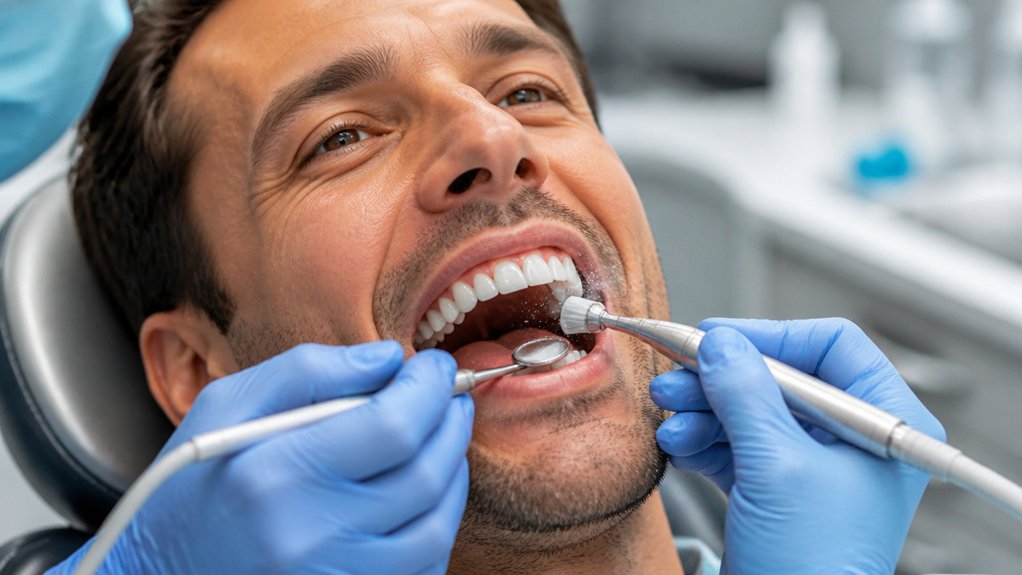
Beyond disease prevention, every professional cleaning delivers two immediate, tangible results: fresher breath and a visibly brighter smile.
Scaling removes plaque, tartar, and food debris from hard-to-reach areas and periodontal pockets, disrupting bacterial colonies that produce foul-smelling compounds. You’ll notice considerably reduced halitosis after just one appointment.
Whitening occurs through a different but equally direct mechanism. Polishing pastes and rotary instruments strip extrinsic stains from coffee, tea, wine, and tobacco, exposing cleaner underlying enamel. For patients seeking more dramatic results beyond what polishing achieves, professional teeth whitening systems like KöR can remove deep stains with minimal sensitivity.
Tartar removal reveals tooth surfaces previously obscured by calcified deposits, immediately improving brightness.
Both effects compound over time. Smoother post-polishing enamel resists bacterial re-adhesion and stain accumulation, extending freshness and brightness between visits.
Regular six-to-twelve-month appointments maintain a lower bacterial load and lighter baseline shade consistently. Early detection of dental issues during these visits also allows your provider to address potential concerns before they develop into more serious conditions.
Poor oral health has been linked to increased risks of serious systemic conditions, meaning the benefits of your cleaning extend well beyond your mouth, supporting overall health and well-being.
A cleaner, brighter smile also delivers measurable psychological returns, as the boost in self-confidence from improved aesthetics encourages more positive social interactions and reduces feelings of self-consciousness.
Why Regular Dental Cleanings Save You Money Long-Term
The cosmetic and hygienic gains from professional cleanings carry a direct financial counterpart: prevention consistently costs less than treatment. A routine cleaning averages around $104, while a single cavity repair runs $150–$450. Each dollar invested in preventive care can yield $8–$50 in avoided restorative costs.
Regular six-month visits enable early detection of failing fillings, decay, and early-stage gum disease — catching problems before they escalate into crowns, root canals, or periodontal surgery. Dental emergencies such as severe infections or knocked-out teeth can also be costly, and consistent preventive care reduces the likelihood of facing these urgent, unplanned expenses.
Removing plaque and tartar reduces your risk of periodontitis, a condition that drives demand for deep cleanings, surgical intervention, and eventually tooth replacement through implants or dentures. Research has also shown that gum disease is linked to serious systemic conditions like diabetes and heart disease, meaning preventive dental care can have far-reaching effects on your overall health costs.
Tooth loss carries consequences well beyond aesthetics, as missing teeth can lead to chewing difficulties, speech problems, and shifting of adjacent teeth that results in misalignment and bite issues. Dental sealants offer an additional layer of protection, capable of preventing up to 80% of cavities within the first two years of application and lasting four or more years with proper care.
Frequently Asked Questions
How Long Does a Professional Teeth Cleaning Appointment Typically Take?
Your routine professional teeth cleaning typically takes 30–60 minutes. If you’ve got gum disease, expect around 60 minutes, while deep cleanings require multiple appointments, each lasting 1–2 hours, depending on your oral health complexity.
Is Professional Teeth Cleaning Painful or Uncomfortable for Sensitive Teeth?
Like a storm that passes quickly, you’ll likely feel mild discomfort during cleaning if you have sensitive teeth, but it’s typically brief, resolving within 24–48 hours, and rarely severe.
How Often Should High-Risk Patients Schedule Professional Dental Cleanings?
If you’re high-risk—due to gum disease, diabetes, smoking, or similar factors—you should schedule professional cleanings every 3–4 months. With multiple risk factors present, you’ll benefit most from appointments as frequently as every 3 months.
What Is the Difference Between a Regular Cleaning and Deep Cleaning?
Regular cleanings maintain healthy gums above the gumline, while deep cleanings treat active gum disease below it. You’ll need deep cleaning when you’ve developed periodontitis, as it removes bacterial deposits from roots and reduces periodontal pockets.
Can Pregnant Women Safely Receive Professional Dental Cleanings?
Yes, you can safely receive professional dental cleanings during pregnancy. The ADA and ACOG recommend routine cleanings in all trimesters, as they’re essential for controlling pregnancy-related gingivitis and reducing risks of periodontal disease and adverse outcomes.
Conclusion
Regular dental cleanings aren’t just about a polished smile — they’re your first line of defense against the silent progression of oral disease. You’re protecting your heart, stabilizing your blood sugar, and catching cellular irregularities before they advance into something far more serious. The chair you’re reluctant to sit in twice a year could spare you from procedures far more involved down the road. Small appointments now prevent significant interventions later.
References
- https://collegehilldentalpa.com/2023/10/02/the-top-5-benefits-of-professional-dental-cleanings/
- https://landmarkdentalarts.com/5-benefits-of-getting-a-professional-dental-cleaning/
- https://www.northpointefamilydentist.com/blog/top-10-health-benefits-of-regular-dental-cleaning-18719.html
- https://lunadental.ca/blog/top-5-benefits-of-regular-teeth-cleaning-and-check-ups/
- https://www.ncbi.nlm.nih.gov/books/NBK554695/
- https://medlineplus.gov/ency/article/001957.htm
- https://www.libertytreeprosthodontics.com/blog/5-benefits-of-getting-a-professional-dental-cleaning/
- https://my.clevelandclinic.org/health/treatments/11187-dental-check-up
- https://www.maycerdental.com/blog/5-benefits-of-professional-dental-cleaning-cip50014/
- https://www.esthetiquedental.com/can-professional-cleanings-help-prevent-cavities-what-to-know/
- https://www.shoreview-dental.com/how-a-regular-dental-service-can-prevent-cavities
- https://www.highlandoakdental.com/blog/the-science-behind-teeth-cleaning-how-it-prevents-cavities-and-gum-disease/
- https://eicondental.com/blog/role-of-dental-cleaning-preventing-cavities-cip50014/
- https://nwdentalatlanta.com/blog/dental-cleaning-can-improve-overall-health-cip126/
- https://www1.deltadentalins.com/wellness/preventive-care/articles/why-get-a-dental-cleaning.html
- https://www.ada.org/resources/ada-library/oral-health-topics/home-care
- https://drclemente.com/blog/how-routine-dental-cleanings-from-your-dentist-prevents-cavities/
- https://www.drsburau.com/detect-oral-cancer-early-with-routine-cleanings/
- https://www.ascenddentistry.com/blog/dental-cleaning-and-checkup-with-oral-cancer-screening
- https://pmc.ncbi.nlm.nih.gov/articles/PMC3469776/