
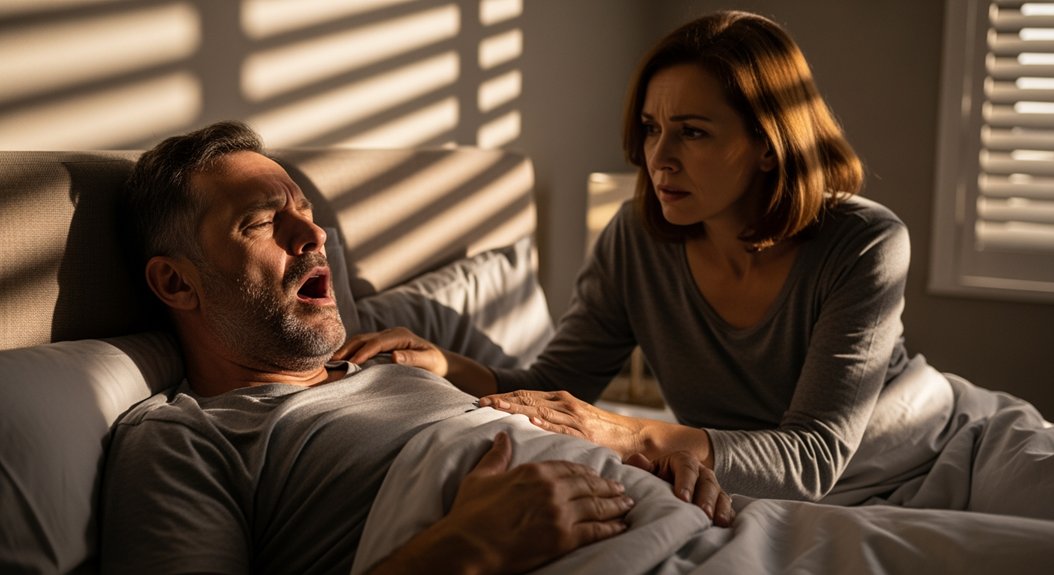
What Are The Warning Signs Of Sleep Apnea In West Melbourne?
You’ll recognize sleep apnea through several distinct warning signs: excessive daytime drowsiness that interferes with work or driving, loud snoring interrupted by gasping or silent pauses, waking multiple times nightly to urinate, morning headaches with dry mouth, and noticeable difficulties with concentration and memory. Your bed partner may observe breathing interruptions while you sleep. These symptoms stem from repeated oxygen deprivation throughout the night, stressing your cardiovascular system and fragmenting your rest. Understanding each warning sign’s underlying mechanism helps you identify when it’s time to seek professional evaluation.
Key Takeaways
- Excessive daytime sleepiness and unintentional dozing during work, reading, or driving despite adequate sleep hours.
- Loud snoring interrupted by silent pauses, gasping, or choking sounds observed by bed partners during sleep.
- Frequent nighttime awakenings with urgent bathroom trips, causing fragmented rest and unrefreshed mornings.
- Morning headaches, dry mouth, sore throat, and dizziness resulting from overnight oxygen deprivation.
- Cognitive difficulties including memory problems, concentration issues, mood changes, and slowed reaction times.
Experiencing Constant Fatigue and Drowsiness Throughout Your Day

Excessive daytime sleepiness represents one of the most prominent warning signs of sleep apnea, yet it’s frequently dismissed as mere tiredness or stress.
Daytime sleepiness is often mistaken for routine fatigue, masking a serious underlying condition that demands medical attention.
You’ll find yourself struggling to stay alert during routine activities, even after seemingly adequate sleep. This persistent fatigue goes beyond normal tiredness—you might unintentionally doze off while working, reading, or even driving, greatly increasing your accident risk.
You may notice difficulty concentrating during sedentary situations, like watching television or sitting in meetings. Your productivity suffers as your brain battles constant drowsiness.
What makes this symptom particularly concerning is that you’re often unaware of how severely it’s affecting your daily functioning. This reduced alertness stems from your body’s repeated nighttime oxygen deprivation, preventing restorative sleep despite spending sufficient hours in bed.
Recognizing Disrupted Breathing Patterns While You Sleep
While you sleep, disrupted breathing patterns emerge as the hallmark physiological feature of sleep apnea, though you’ll rarely detect them yourself.
Your bed partner typically observes these episodes first—loud snoring suddenly interrupted by silence, followed by gasping or choking sounds as breathing resumes.
These apnea events represent complete cessation of airflow, while hypopneas involve shallow breathing. Each episode reduces oxygen delivery to your brain and essential organs, triggering brief awakenings that fragment your sleep architecture.
You’ll likely experience restlessness, tossing and turning throughout the night without understanding why. The breathing interruptions can occur dozens or even hundreds of times nightly, creating a cycle of oxygen deprivation and sleep disruption that profoundly impacts your health, even when you’re unaware these disturbances are happening.
With over 22 million Americans affected by sleep apnea and many remaining undiagnosed, these airway blockages during sleep create serious health risks that extend far beyond nighttime discomfort.
Noticing Frequent Night Awakenings and Bathroom Trips
Those breathing disruptions don’t just fragment your sleep—they trigger a cascade of nighttime awakenings that often manifest as urgent bathroom trips.
When your airway repeatedly collapses during sleep, your body enters survival mode, releasing hormones that increase urine production.
You’ll likely notice:
- Waking 2-3+ times nightly with an urgent need to urinate, even if you’ve limited fluids before bed
- Difficulty returning to sleep after each awakening, creating a pattern of fragmented rest
- Unrefreshed mornings despite spending adequate hours in bed
- Partner observations of your restlessness or breathing pauses you don’t remember
This nocturia isn’t a bladder problem—it’s your body responding to oxygen deprivation.
The connection between frequent urination and breathing interruptions often goes unrecognized, delaying proper diagnosis and treatment.
Waking Up With Headaches and Physical Discomfort
As morning arrives, your body’s overnight oxygen deprivation reveals itself through distinct physical symptoms that shouldn’t be ignored. Morning headaches occur when reduced oxygen levels cause blood vessels in your brain to dilate, creating pressure and pain. You’ll often notice a dry mouth or sore throat from mouth breathing throughout the night.
| Morning Symptom | Underlying Cause |
|---|---|
| Throbbing headaches | Oxygen deprivation during apnea episodes |
| Dry mouth/sore throat | Persistent mouth breathing overnight |
| Dizziness | Fluctuating blood oxygen levels |
| Unrefreshed feeling | Fragmented, poor-quality sleep |
| Elevated blood pressure | Repeated stress from breathing interruptions |
These symptoms typically improve within hours but return daily, signaling chronic sleep disruption requiring medical evaluation.
Observing Mental Fog and Emotional Changes
Why does your mind feel clouded despite sleeping through the night? Sleep apnea disrupts your brain’s oxygen supply and sleep architecture, leading to measurable cognitive and emotional decline.
These changes aren’t just “feeling off”—they’re neurological consequences of repeated breathing interruptions.
Mental fog and emotional changes include:
- Concentration difficulties – You’ll struggle to focus on tasks that once came easily, with noticeable decreases in work or academic performance.
- Memory impairment – Short-term recall becomes problematic, affecting daily functioning and professional responsibilities.
- Mood disturbances – Irritability, anxiety, and depression emerge as your brain compensates for chronic sleep fragmentation.
- Slowed reaction times – Decision-making and response speed diminish, creating safety concerns while driving or operating machinery.
These symptoms warrant immediate medical evaluation.
Frequently Asked Questions
Can Children Develop Sleep Apnea or Is It Only Adults?
Yes, children can absolutely develop sleep apnea. You’ll often notice enlarged tonsils or adenoids as common causes in kids. Watch for snoring, mouth breathing, restless sleep, bedwetting, and behavioral issues like hyperactivity or poor school performance in your child.
Does Losing Weight Help Reduce Sleep Apnea Symptoms?
Yes, losing weight can greatly reduce sleep apnea symptoms, especially if you’re overweight. Weight loss decreases fat deposits around your upper airway, improving airflow and reducing breathing obstructions during sleep, often lessening symptom severity considerably.
How Is Sleep Apnea Officially Diagnosed by Medical Professionals?
Though home tests exist, you’ll need a polysomnography (sleep study) monitored by professionals who track your breathing, oxygen levels, brain waves, and heart rhythm overnight to confirm sleep apnea and determine its severity.
What Treatment Options Are Available for Sleep Apnea Patients?
Your treatment options include CPAP therapy (continuous positive airway pressure), oral appliances that reposition your jaw, lifestyle modifications like weight loss, positional therapy, and in severe cases, surgical interventions to remove obstructive tissue or reposition anatomical structures.
Is Sleep Apnea Hereditary or Caused by Lifestyle Factors?
Sleep apnea’s caused by both hereditary and lifestyle factors. You’re at higher risk if family members have it or if you have anatomical features like a small jaw. Obesity, smoking, and alcohol use greatly increase your likelihood of developing this condition.
Conclusion
If you’re experiencing persistent fatigue, disrupted breathing, frequent awakenings, morning headaches, or mental fog, you shouldn’t ignore these warning signs. Sleep apnea won’t improve on its own, won’t resolve with time, and won’t disappear without intervention. You need to schedule a consultation with a sleep specialist in West Melbourne, you need to undergo proper diagnostic testing, and you need to explore evidence-based treatment options. Your quality of life depends on addressing these symptoms promptly and effectively.
References
- https://www.geisinger.org/health-and-wellness/wellness-articles/2025/02/25/21/50/warning-signs-of-sleep-apnea
- https://www.lung.org/lung-health-diseases/lung-disease-lookup/sleep-apnea/symptoms-diagnosis
- https://www.webmd.com/sleep-disorders/sleep-apnea/symptoms-of-sleep-apnea
- https://www.mayoclinic.org/diseases-conditions/obstructive-sleep-apnea/symptoms-causes/syc-20352090
- https://www.sleephealthypa.com/2025/01/15/10-common-sleep-apnea-symptoms-you-might-be-ignoring/
- https://my.clevelandclinic.org/health/diseases/8718-sleep-apnea
- https://blunncreekdental.com/sleep-apnea-warning-signs/
- https://www.nhlbi.nih.gov/health/sleep-apnea/symptoms
